


Yep unfortunately. There's also a lot of flights that are going to get cancelled but most people will still be able to fly out at a later time the same day. It's supposed to be like that until at least May and me and my partner are getting a flight next month.@Gizmo, heads up!
(The Guardian) New Zealand mulls car restrictions if fuel supplies run low
Officials in New Zealand say they are considering using decades-old laws restricting vehicle use if fuel supplies dwindle due to the war in the Middle East.
Finance minister Nicola Willis told reporters on Thursday that officials had discussed using legislation introduced to restrict fuel use in the wake of the Iranian revolution in 1979 in response to the crisis.
Under those laws, car owners had to nominate one day per week when they would not use their vehicle and faced hefty fines if caught driving. They also allowed the government to authorise the sale of coupons to restrict fuel use, and restrict the amount that could be sold, Agence France-Presse is reporting.
The so-called “carless days” were in effect from July 1979 to May 1980.
The minister’s comments came as oil prices surged back above $100 a barrel on Thursday.
Off Topix: Embrace the Unexpected in Every Discussion
Off Topix is a well established general discussion forum that originally opened to the public way back in 2009! We provide a laid back atmosphere and our members are down to earth. We have a ton of content and fresh stuff is constantly being added. We cover all sorts of topics, so there's bound to be something inside to pique your interest. We welcome anyone and everyone to register & become a member of our awesome community.
You are using an out of date browser. It may not display this or other websites correctly.
You should upgrade or use an alternative browser.
You should upgrade or use an alternative browser.
War in the Middle East (US-Iran-Israel Conflict)
- Thread starter Matthew-NC
- Start date


(The Guardian) 1:56pm Summary
--In his first public remarks as Iran’s supreme leader, Ayatollah Mojtaba Khamenei apparently called for national unity and said that all US bases in the region should close or face attacks. The strait of Hormuz will remain closed in order to pressure Iran’s enemies, Khamenei reportedly said. He was not seen in the broadcast and the statement was delivered by a newsreader.
--Khamenei said Iran will avenge the those who were killed in US-Israeli airstrikes, including the dozens of seven to 12-year-old girls who were killed in an airstrike that hit a school in Minab. He also offered financial compensation for Iranians who suffered damage from the attacks.
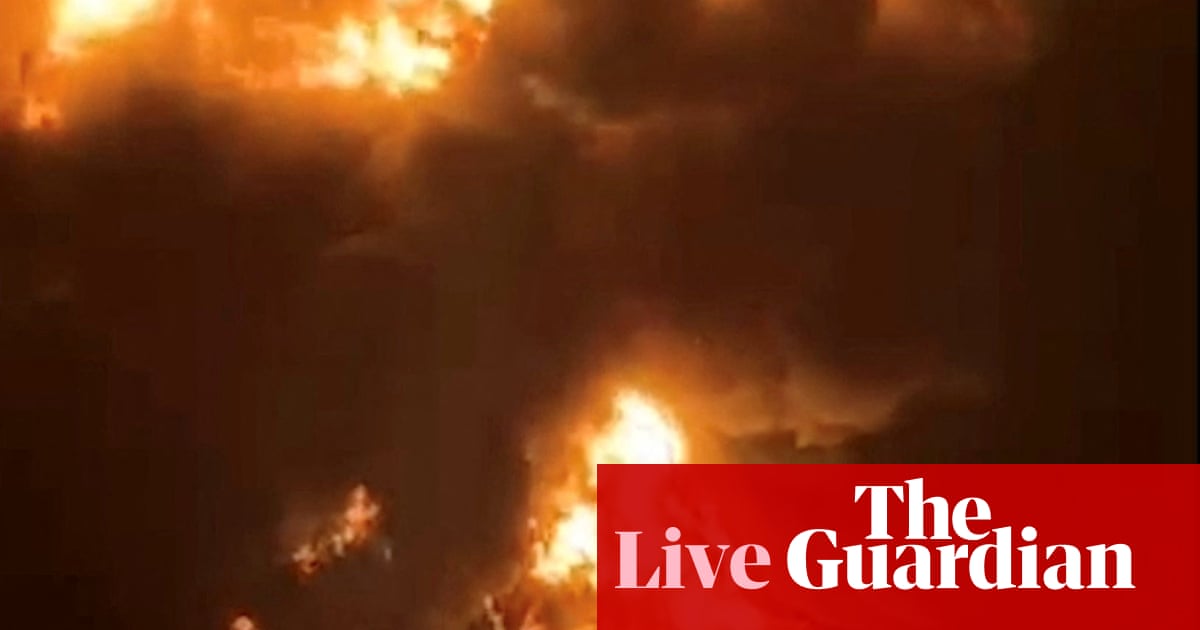
--Iran appeared to have set two tankers ablaze on fire in Iraqi waters, killing one crew member, as it stepped up strikes on oil and transport facilities around the Middle East.
--Thailand’s foreign ministry on Thursday said it had requested an apology from after a Thai bulk carrier was attacked in the strait of Hormuz yesterday. Three ships were hit by unknown projectiles in the strategic strait abutting Iran. While two of the ships sustained damage, the crew was forced to evacuate the Thai bulk carrier after it caught fire.
--US energy secretary Chris Wright told CNBC on Thursday that the navy cannot escort ships through the strait of Hormuz now but it was “quite likely” that could happen by the end of the month. The issues with protecting oil tankers in the strait were discussed by US military officials in a classified briefing to top lawmakers on Tuesday, according to a person familiar with the matter.
--As many as 3.2m Iranians have fled their homes to find safety from the joint US-Israeli aerial bombing campaign bombarding the country, according to preliminary assessments by the the UN refugee agency. “Most of them are reportedly fleeing from Tehran and other major urban areas towards the north of the country and rural areas to seek safety,” the UNHCR said in a statement on Thursday afternoon.
--Oman’s foreign minister, and the mediator in the US Iran nuclear talks, has claimed the US will not achieve as much through war as it could have achieved in the peace talks. Badr bin Hamad Al Busaidi was speaking to Omani reporters in Muscat and appears to challenge the premise that the war is about Iran’s nuclear program, arguing it was designed to weaken Iran politically.
--Oil prices, which shot up earlier in the week to nearly $120 a barrel before retreating, jumped almost 10% back above $100 a barrel before dropping to $98 a barrel amid renewed fears about supply disruption. A spokesperson for Iran’s military command had earlier warned in remarks directed at the US: “Get ready for oil to be $200 a barrel, because the oil price depends on regional security, which you have destabilised.”
--Vladimir Putin’s “hidden hand” lies behind Iran’s military methods, the UK defence secretary, John Healey, has said, after a night in which drones struck a camp used by western forces in Erbil, northern Iraq. Healey was speaking after British officers at the UK’s military headquarters in north-west London had told him that Iranian and Iranian proxy drone pilots were increasingly adopting tactics “from the Russians”.
--Iran wants to ensure that a war will not be imposed on it again in the future, deputy foreign minister Majid Takht-Ravanchi told AFP, as the conflict raged with the United States and Israel. “We want to see that war is not going to be imposed again on Iran,” said Takht-Ravanchi in an interview with AFP in Tehran.
--The International Maritime Organization (IMO) will convene an “extraordinary session” next week to discuss threats to shipping in the Middle East and particularly in the strait of Hormuz, the agency said Thursday. The meeting, scheduled for 18-19 March at the IMO headquarters in London, was requested by several council members.
--Israeli forces conducted a drone strike on an area of Beirut where displaced residents were sheltering in tents. At least eight people were killed in the attack on the capital’s beachfront.
--The Israeli military issued a warning on Thursday to residents of a village in Lebanon located about 64 kilometres (40 miles) east of Beirut. It also announced that it had begun yet another widescale wave of strikes on Iran. The IDF also said that Israeli forces had struck a nuclear program site in Iran earlier this week, but the Guardian was not able to independently verify that statement.
--Amid the Israeli strikes on Lebanon and Iran, displaced Palestinians in a tent encampment near Gaza City said they received a call from the Israeli military on Wednesday night ordering them to evacuate in five minutes. Video shows the camp then getting struck.
--Drones struck Kuwait international airport on Thursday, causing some material damage. It is unclear who is responsible for the attack, which came one day after four people were injured when air defences intercepted two drones near Dubai airport in the United Arab Emirates. Soon after the attack, the Dutch carrier KLM canceled all flights to Dubai up to and including 28 March.
--An Italian military base in the Kurdish region of Iraq was attacked, Italian foreign minister Antonio Tajani said in a post on X. Tajani said he strongly condemned the attack in Erbil, but didn’t say if authorities knew who was responsible for it. He said all soldiers on the base were safe.
--About 2,000 people have reportedly been killed in the war launched almost two weeks ago, while Unicef said more than 1,100 children had been killed or injured.
 www.theguardian.com
--In his first public remarks as Iran’s supreme leader, Ayatollah Mojtaba Khamenei apparently called for national unity and said that all US bases in the region should close or face attacks. The strait of Hormuz will remain closed in order to pressure Iran’s enemies, Khamenei reportedly said. He was not seen in the broadcast and the statement was delivered by a newsreader.
--Khamenei said Iran will avenge the those who were killed in US-Israeli airstrikes, including the dozens of seven to 12-year-old girls who were killed in an airstrike that hit a school in Minab. He also offered financial compensation for Iranians who suffered damage from the attacks.
--Iran appeared to have set two tankers ablaze on fire in Iraqi waters, killing one crew member, as it stepped up strikes on oil and transport facilities around the Middle East.
--Thailand’s foreign ministry on Thursday said it had requested an apology from after a Thai bulk carrier was attacked in the strait of Hormuz yesterday. Three ships were hit by unknown projectiles in the strategic strait abutting Iran. While two of the ships sustained damage, the crew was forced to evacuate the Thai bulk carrier after it caught fire.
--US energy secretary Chris Wright told CNBC on Thursday that the navy cannot escort ships through the strait of Hormuz now but it was “quite likely” that could happen by the end of the month. The issues with protecting oil tankers in the strait were discussed by US military officials in a classified briefing to top lawmakers on Tuesday, according to a person familiar with the matter.
--As many as 3.2m Iranians have fled their homes to find safety from the joint US-Israeli aerial bombing campaign bombarding the country, according to preliminary assessments by the the UN refugee agency. “Most of them are reportedly fleeing from Tehran and other major urban areas towards the north of the country and rural areas to seek safety,” the UNHCR said in a statement on Thursday afternoon.
--Oman’s foreign minister, and the mediator in the US Iran nuclear talks, has claimed the US will not achieve as much through war as it could have achieved in the peace talks. Badr bin Hamad Al Busaidi was speaking to Omani reporters in Muscat and appears to challenge the premise that the war is about Iran’s nuclear program, arguing it was designed to weaken Iran politically.
--Oil prices, which shot up earlier in the week to nearly $120 a barrel before retreating, jumped almost 10% back above $100 a barrel before dropping to $98 a barrel amid renewed fears about supply disruption. A spokesperson for Iran’s military command had earlier warned in remarks directed at the US: “Get ready for oil to be $200 a barrel, because the oil price depends on regional security, which you have destabilised.”
--Vladimir Putin’s “hidden hand” lies behind Iran’s military methods, the UK defence secretary, John Healey, has said, after a night in which drones struck a camp used by western forces in Erbil, northern Iraq. Healey was speaking after British officers at the UK’s military headquarters in north-west London had told him that Iranian and Iranian proxy drone pilots were increasingly adopting tactics “from the Russians”.
--Iran wants to ensure that a war will not be imposed on it again in the future, deputy foreign minister Majid Takht-Ravanchi told AFP, as the conflict raged with the United States and Israel. “We want to see that war is not going to be imposed again on Iran,” said Takht-Ravanchi in an interview with AFP in Tehran.
--The International Maritime Organization (IMO) will convene an “extraordinary session” next week to discuss threats to shipping in the Middle East and particularly in the strait of Hormuz, the agency said Thursday. The meeting, scheduled for 18-19 March at the IMO headquarters in London, was requested by several council members.
--Israeli forces conducted a drone strike on an area of Beirut where displaced residents were sheltering in tents. At least eight people were killed in the attack on the capital’s beachfront.
--The Israeli military issued a warning on Thursday to residents of a village in Lebanon located about 64 kilometres (40 miles) east of Beirut. It also announced that it had begun yet another widescale wave of strikes on Iran. The IDF also said that Israeli forces had struck a nuclear program site in Iran earlier this week, but the Guardian was not able to independently verify that statement.
--Amid the Israeli strikes on Lebanon and Iran, displaced Palestinians in a tent encampment near Gaza City said they received a call from the Israeli military on Wednesday night ordering them to evacuate in five minutes. Video shows the camp then getting struck.
--Drones struck Kuwait international airport on Thursday, causing some material damage. It is unclear who is responsible for the attack, which came one day after four people were injured when air defences intercepted two drones near Dubai airport in the United Arab Emirates. Soon after the attack, the Dutch carrier KLM canceled all flights to Dubai up to and including 28 March.
--An Italian military base in the Kurdish region of Iraq was attacked, Italian foreign minister Antonio Tajani said in a post on X. Tajani said he strongly condemned the attack in Erbil, but didn’t say if authorities knew who was responsible for it. He said all soldiers on the base were safe.
--About 2,000 people have reportedly been killed in the war launched almost two weeks ago, while Unicef said more than 1,100 children had been killed or injured.
Middle East crisis live: top Iranian nuclear scientists killed, Israel says; US carrying out rescue efforts after losing refuelling plane in Iraq
Israeli prime minister Benjamin Netanyahu also issued veiled threat to kill new Iranian supreme leader; US central command says aircraft lost in ‘friendly airspace’
www.theguardian.com
(The Guardian) 6:38pm Summary
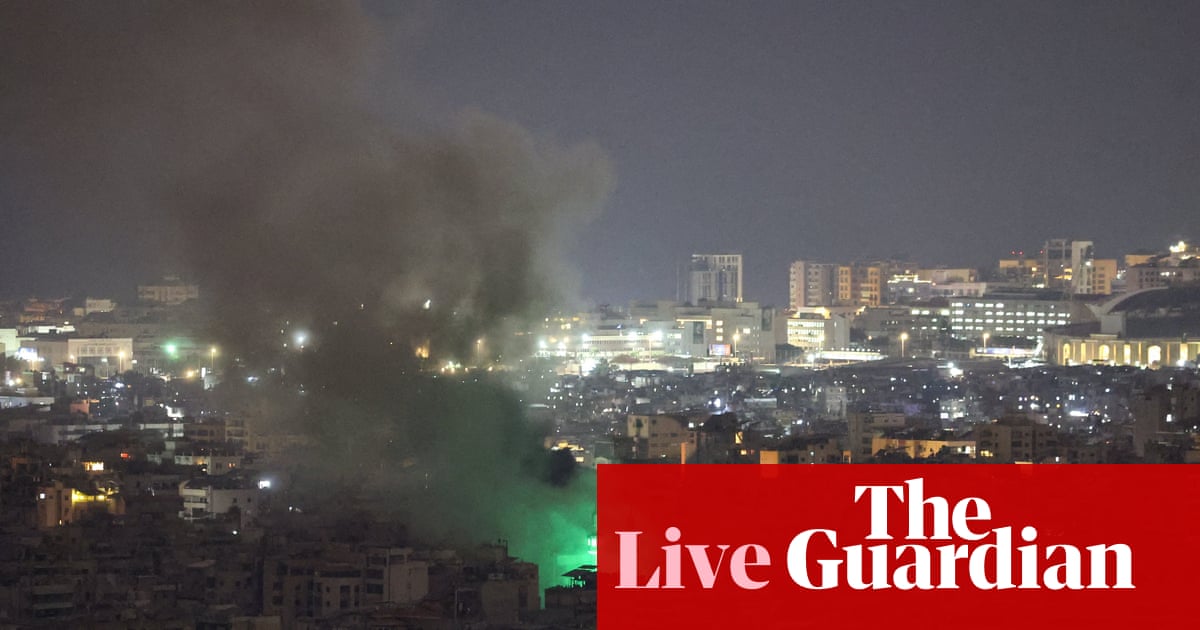
--Several hours ago, at approximately 10pm local time, the Israeli military said it had launched a new wave of strikes on Tehran. Residents in the Iranian capital reported heavy explosions.
--Israeli strikes have killed more than 100 children in Lebanon, according to the latest data from the Lebanese health ministry. A total of 773 people have been killed since Israel’s first strikes on the country on 2 March, with a further 1,933 people wounded, the ministry said in its daily report. It said 103 children had now been killed in the strikes, and a further 326 children have been wounded.
--The Pentagon is moving additional Marines and warships to the Middle East, the Wall Street Journal and other outlets reported. US defence secretary Pete Hegseth reportedly approved a request from US Central Command for an element of an amphibious ready group and attached Marine expeditionary unit (MEU). There are differing reports about the size of the contingent to be deployed, but the group typically consists of several warships and 5,000 Marines and sailors. It is not yet clear what the MEU will be used for or where exactly it will be deployed. But, their presence gives commanders additional options for a range of contingencies, a source told CNN. Trump and his administration have repeatedly refused to rule out US boots on the ground in Iran.
--Donald Trump rejected an offer from Vladimir Putin to move Iran’s enriched uranium to Russia, Axios reported. The offer was reportedly made during the phone call the two leaders held earlier this week. Trump has repeatedly stated that one of his key objectives in launching the war is to prevent Tehran from ever having a nuclear weapon.
--But in his interview on Fox News Radio on Friday morning, Trump suggested that securing Iran’s highly enriched uranium is not currently a top priority: “We are not focused on that, but at some point we might be.” Previous reports have suggested that the US president is considering sending US troops into Iran to seize its uranium.
--Trump also said he didn’t think “it’s going to be long when [the war is] over”. Asked when he might end it, Trump told Fox News Radio it would be up to him: “When I feel it, OK … feel it in my bones.”
--Trump also said he believes that Russia might be helping Iran “a little bit”, before pointing to US support for Ukraine as possible justification. It come after the UK defence secretary, John Healey, said on Thursday that Putin’s “hidden hand” lies behind Iran’s military methods. Last week, the Washington Post and others reported that Moscow was providing Tehran with intelligence on US military assets in the region. Putin denied Russian involvement in a phone call with Trump, US special envoy Steve Witkoff said on Tuesday.
--The UN under-secretary-general for humanitarian affairs and emergency relief coordinator, called for humanitarian aid to be allowed to pass safely through the strait of Hormuz as the US-Israeli war on Iran continues to disrupt one of the world’s most vital shipping routes. In a statement, Tom Fletcher said this will make it harder and more expensive to deliver critical supplies, including food and medicine. Only 77 ships have so far crossed through the critical waterway this month.
--US vice-president JD Vance said the US knows Iran’s new supreme leader is hurt but does not known the full extent of his injuries. “We know that he’s hurt. We don’t know exactly how bad, but we know that he’s hurt,” he told reporters in North Carolina. It appeared to contradict his cabinet colleague US defence secretary Pete Hegseth’s claim earlier on Friday that Khamenei is “wounded and likely disfigured” as he questioned his ability to govern. At present, there is no proof for Hegseth’s claim.
--Hezbollah leader Naim Qassem said in a televised speech on Friday that his group is fighting an “existential” battle and is ready for a “long confrontation” with Israel as the war continues. Israel will be “surprised on the battlefield”, Qassem said, adding that “the enemy’s threats do not scare us”. Israeli threats to assassinate him are “worthless”, he added.
--The US state department is offering rewards of up to $10m to anyone with information on Iran’s new supreme leader Mojtaba Khamenei as well as nine “key leaders” of the Iranian Revolutionary Guard Corps (IRGC). Among the six figures named are new secretary of the Supreme National Security Council Ali Larijani and Esmail Khatib, the minister of intelligence. The others are listed only by their positions.
--A British counter-drone unit has shot down “multiple drones overnight” following recent strikes on coalition bases in Iraq, the UK’s Ministry of Defence said. Overnight, UK Typhoon jets flew air defence operations over Bahrain for the first time, the MoD said in an update shared on X. It added: “British Typhoon and F-35 jets are now flying in defence of British interests and allies across Qatar, Cyprus, UAE, Jordan, and Bahrain.”
--Qatar’s Ministry of Interior said that “a number of specified areas” are being evacuated “as a temporary precautionary measure, in the interest of public safety until the threat has subsided”.
--The armed suspect who crashed into a large Michigan synagogue had lost four family members in an Israeli airstrike in his native Lebanon last week, an unnamed official told the Associated Press on Friday. Here’s our story on that.
--Formula One is poised to cancel races scheduled for next month in Bahrain and Saudi Arabia, as a result of the ongoing conflict in the region. The sport has not yet formally confirmed the grands prix will be scrapped but it is expected to announce their cancellation as soon as this weekend.
 www.theguardian.com
--Several hours ago, at approximately 10pm local time, the Israeli military said it had launched a new wave of strikes on Tehran. Residents in the Iranian capital reported heavy explosions.
--Israeli strikes have killed more than 100 children in Lebanon, according to the latest data from the Lebanese health ministry. A total of 773 people have been killed since Israel’s first strikes on the country on 2 March, with a further 1,933 people wounded, the ministry said in its daily report. It said 103 children had now been killed in the strikes, and a further 326 children have been wounded.
--The Pentagon is moving additional Marines and warships to the Middle East, the Wall Street Journal and other outlets reported. US defence secretary Pete Hegseth reportedly approved a request from US Central Command for an element of an amphibious ready group and attached Marine expeditionary unit (MEU). There are differing reports about the size of the contingent to be deployed, but the group typically consists of several warships and 5,000 Marines and sailors. It is not yet clear what the MEU will be used for or where exactly it will be deployed. But, their presence gives commanders additional options for a range of contingencies, a source told CNN. Trump and his administration have repeatedly refused to rule out US boots on the ground in Iran.
--Donald Trump rejected an offer from Vladimir Putin to move Iran’s enriched uranium to Russia, Axios reported. The offer was reportedly made during the phone call the two leaders held earlier this week. Trump has repeatedly stated that one of his key objectives in launching the war is to prevent Tehran from ever having a nuclear weapon.
--But in his interview on Fox News Radio on Friday morning, Trump suggested that securing Iran’s highly enriched uranium is not currently a top priority: “We are not focused on that, but at some point we might be.” Previous reports have suggested that the US president is considering sending US troops into Iran to seize its uranium.
--Trump also said he didn’t think “it’s going to be long when [the war is] over”. Asked when he might end it, Trump told Fox News Radio it would be up to him: “When I feel it, OK … feel it in my bones.”
--Trump also said he believes that Russia might be helping Iran “a little bit”, before pointing to US support for Ukraine as possible justification. It come after the UK defence secretary, John Healey, said on Thursday that Putin’s “hidden hand” lies behind Iran’s military methods. Last week, the Washington Post and others reported that Moscow was providing Tehran with intelligence on US military assets in the region. Putin denied Russian involvement in a phone call with Trump, US special envoy Steve Witkoff said on Tuesday.
--The UN under-secretary-general for humanitarian affairs and emergency relief coordinator, called for humanitarian aid to be allowed to pass safely through the strait of Hormuz as the US-Israeli war on Iran continues to disrupt one of the world’s most vital shipping routes. In a statement, Tom Fletcher said this will make it harder and more expensive to deliver critical supplies, including food and medicine. Only 77 ships have so far crossed through the critical waterway this month.
--US vice-president JD Vance said the US knows Iran’s new supreme leader is hurt but does not known the full extent of his injuries. “We know that he’s hurt. We don’t know exactly how bad, but we know that he’s hurt,” he told reporters in North Carolina. It appeared to contradict his cabinet colleague US defence secretary Pete Hegseth’s claim earlier on Friday that Khamenei is “wounded and likely disfigured” as he questioned his ability to govern. At present, there is no proof for Hegseth’s claim.
--Hezbollah leader Naim Qassem said in a televised speech on Friday that his group is fighting an “existential” battle and is ready for a “long confrontation” with Israel as the war continues. Israel will be “surprised on the battlefield”, Qassem said, adding that “the enemy’s threats do not scare us”. Israeli threats to assassinate him are “worthless”, he added.
--The US state department is offering rewards of up to $10m to anyone with information on Iran’s new supreme leader Mojtaba Khamenei as well as nine “key leaders” of the Iranian Revolutionary Guard Corps (IRGC). Among the six figures named are new secretary of the Supreme National Security Council Ali Larijani and Esmail Khatib, the minister of intelligence. The others are listed only by their positions.
--A British counter-drone unit has shot down “multiple drones overnight” following recent strikes on coalition bases in Iraq, the UK’s Ministry of Defence said. Overnight, UK Typhoon jets flew air defence operations over Bahrain for the first time, the MoD said in an update shared on X. It added: “British Typhoon and F-35 jets are now flying in defence of British interests and allies across Qatar, Cyprus, UAE, Jordan, and Bahrain.”
--Qatar’s Ministry of Interior said that “a number of specified areas” are being evacuated “as a temporary precautionary measure, in the interest of public safety until the threat has subsided”.
--The armed suspect who crashed into a large Michigan synagogue had lost four family members in an Israeli airstrike in his native Lebanon last week, an unnamed official told the Associated Press on Friday. Here’s our story on that.
--Formula One is poised to cancel races scheduled for next month in Bahrain and Saudi Arabia, as a result of the ongoing conflict in the region. The sport has not yet formally confirmed the grands prix will be scrapped but it is expected to announce their cancellation as soon as this weekend.
Middle East crisis live: US has carried out strikes on ‘every military target’ on Iran’s Kharg island, Trump says
US president threatens to attack oil infrastructure on the island unless passage through strait of Hormuz is unblocked
www.theguardian.com

I feel like this news piece is more appropriate being here than creating a new thread:
CNN Article By Sean Lyngaas
Pro-Iran hackers claim cyberattack on major US medical device maker
A cyberattack claimed by pro-Iran hackers has caused a “global network disruption” to a major US medical device maker, according to a company statement.CNN Article By Sean Lyngaas
A cyberattack claimed by pro-Iran hackers has caused a “global network disruption” to a major US medical device maker, according to a company statement.
Michigan-based Stryker “is experiencing a global network disruption to our Microsoft environment as a result of a cyberattack,” the company said in a statement to CNN. “We have no indication of ransomware or malware and believe the incident is contained. Our teams are working rapidly to understand the impact of the attack on our systems. Stryker has business continuity measures in place to continue to support our customers and partners.”
Stryker makes a range of hospital equipment, from defibrillators to ambulance cots. The company’s computers in Ireland were also hit by the cyberattack, according to local media reports. Stryker say it serves more than 150 million patients through its health equipment and services.
It was unclear what immediate impacts, if any, the hack had on Stryker’s provision of medical equipment to US hospitals. Cybersecurity executives across the health sector told CNN on Wednesday they were on alert for any impacts.
One piece of Stryker equipment apparently disrupted by the cyberattack was an IT system called Lifenet, which emergency responders use to communicate patient data to hospitals.
Maryland’s Institute for Emergency Medical Services (EMS) Systems, which oversees the state’s emergency medical services, told hospitals in the state Wednesday that it had received multiple reports that Stryker’s Lifenet electrocardiogram transmission system was “non-functional in most parts of the state.”
“Until the transmission capability has been restored, EMS clinicians should initiate radio consultation with the receiving hospital,” read the notice from the Maryland emergency services agency, which CNN obtained.
“A message was sent in abundance of caution until the situation can be resolved,” Todd Abramowitz, a spokesperson for the agency, told CNN in an email when asked for comment. “No effect on patient care, paramedics convey their interpretation verbally as they do all the time, routinely.”
The cyberattack appears to be one of the first notable pro-Iranian hacks against US infrastructure since the US and Israel began bombing Iran last month. US intelligence officials have warned about the possibility of Tehran-linked hackers retaliating for the US and Israeli bombing of Iran that began last month.
In a social media post on Wednesday, the hacking group that claimed responsibility said the Stryker hack was retaliation for a missile strike on an elementary school in Iran, which Iranian state media has claimed killed at least 168 children. The Pentagon is investigating that incident.
Federal agencies like the Department of Health and Human Services on Wednesday were trying to get a sense of any potential impacts the hack could have on patient care, sources familiar with the response told CNN.
A Wednesday evening call held by the Healthcare and Public Health Sector Coordinating Council, an industry group that works with the government to bolster security in the sector, was brief and yielded little new information about the Stryker hack, a source on the call told CNN.
Hospitals are trying to determine whether they should disconnect Stryker equipment from hospitals systems.
“Stryker needs to quickly become more forthcoming as hospitals are faced with dilemma of whether to cut off Stryker or not,” a cybersecurity executive in the health care sector told CNN. “Stryker publicly claims situation is ‘contained.’ What does that mean?”
The Wall Street Journal reported earlier on the pro-Iran hack. Stryker’s shares fell more than 3% following that report.
Iran-linked hackers had been largely quiet in terms of attacks on US organizations since the war began last month.
Email security firm Proofpoint said Wednesday that its tracking of known Iranian groups had turned up only one hacking campaign — an attempt to hack a US think tank employee — since the war began.
“Too much of cybersecurity is focused on lower consequence breaches from financially motivated enemies, while we’re increasing our exposures to nation states and other enemies who seek to disrupt and destroy,” Joshua Corman, a cybersecurity expert who has focused on the health sector for years, told CNN. “China, Iran, Russia, etc. all have the means, motive, and opportunity to deal us devastating disruptions.”
Despite the US and Israel’s bombardment of Iranian government facilities, Wednesday’s hack showed that Tehran still has hackers capable of inflicting damage, cybersecurity analysts said.
“Cyber operations don’t require much infrastructure,” said Alex Rose, global head of government partnerships at cybersecurity firm Sophos. “A laptop and an internet connection can be enough to reach out and wreak havoc.”
That's why I create these "omnibus threads." I've seen too many times on too many forums where a major world-changing event - like the current Middle Eastern conflict - is shown in so many different little threads that no one can follow along w/reasonable speed and clarity. I just prefer to have one major thread; if I post anything related, I usually add the omnibus link so they'll see the connection.I feel like this news piece is more appropriate being here than creating a new thread
(The Guardian) 7:05pm Summary
--Lebanon’s health ministry said Israeli strikes have killed 826 people, including 65 women and 106 children, since the start of the war. In a statement today, the ministry said 31 paramedics were among those killed. Local health authorities reported this morning that an Israeli strike killed 12 medical staff at a clinic in the southern town of Burj Qalaouiya.
--At least 15 people were killed when a strike by Israel and the US hit a factory in the central Iranian city of Isfahan, the semi-official Fars news agency said. There were workers inside the factory, which produces heaters and refrigerators, when the strike hit, Fars reported.
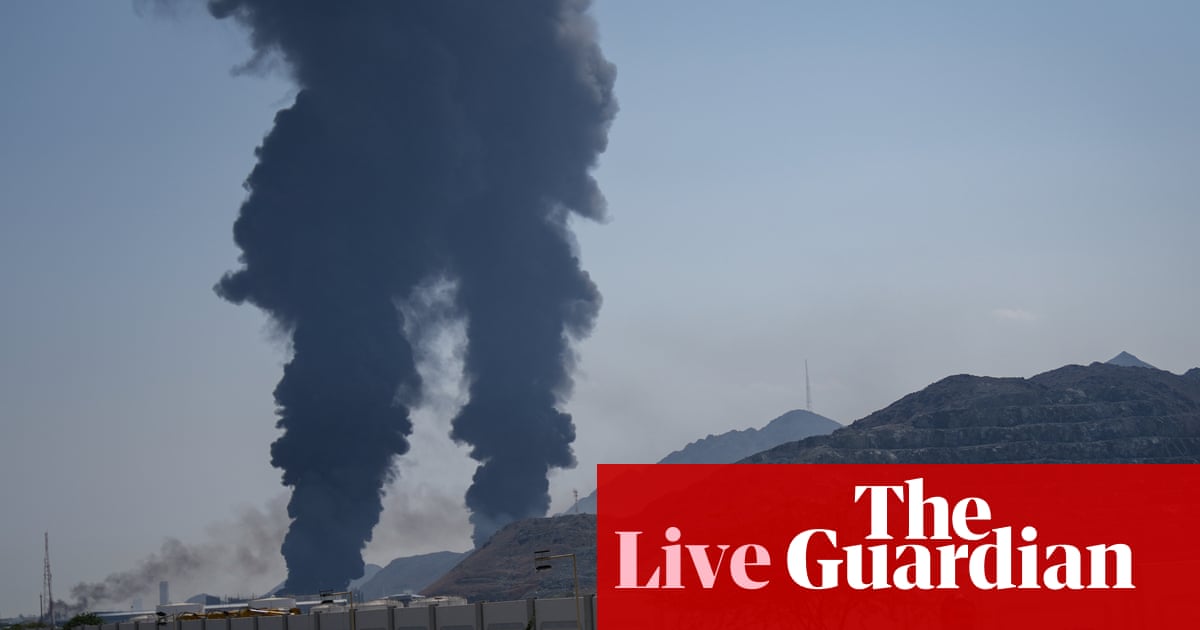
--Iran issued an evacuation warning for three major ports in the United Arab Emirates on Saturday, including the busiest in the Middle East, the Associated press reported. Iran claims the US had used “ports, docks and hideouts” in the UAE to launch strikes on Iran’s Kharg Island. It urged people to evacuate areas where it said US forces were sheltering.
--Trump renewed his call for other nations to help secure the strait of Hormuz and said the US will coordinate with them amid the US-Israeli war on Iran. “The United States of America has beaten and completely decimated Iran, both Militarily, Economically, and in every other way, but the Countries of the World that receive Oil through the Hormuz Strait must take care of that passage, and we will help – A LOT,” Trump wrote in a Truth Social post.
--The Trump administration rebuffed efforts by Middle Eastern allies to start diplomatic negotiations aimed at ending the Iran war that started two weeks ago with a massive US-Israeli air assault, according to reporting from Reuters.
--The Israeli military says it killed two senior officials in Iran’s Khatam al-Anbiya Emergency Command in an air strike on Tehran. In a post on X, army spokesperson Avichay Adraee said Abdullah Jalali-Nasab and Amir Shariat, described as senior figures in the command’s intelligence branch, were killed in the attack.
--Israel informed the US this week that it is running critically low on ballistic missile interceptors as the conflict with Iran continues, Semafor reported on Saturday, citing US officials familiar with the matter.
--Federal Communications Commission (FCC) chair Brendan Carr accused news broadcasters of “running hoaxes and news distortions” amid the ongoing war in Iran in a post on X. “Broadcasters that are running hoaxes and news distortions - also known as the fake news - have a chance now to correct course before their license renewals come up,” Carr wrote.
 www.theguardian.com
--Lebanon’s health ministry said Israeli strikes have killed 826 people, including 65 women and 106 children, since the start of the war. In a statement today, the ministry said 31 paramedics were among those killed. Local health authorities reported this morning that an Israeli strike killed 12 medical staff at a clinic in the southern town of Burj Qalaouiya.
--At least 15 people were killed when a strike by Israel and the US hit a factory in the central Iranian city of Isfahan, the semi-official Fars news agency said. There were workers inside the factory, which produces heaters and refrigerators, when the strike hit, Fars reported.
--Iran issued an evacuation warning for three major ports in the United Arab Emirates on Saturday, including the busiest in the Middle East, the Associated press reported. Iran claims the US had used “ports, docks and hideouts” in the UAE to launch strikes on Iran’s Kharg Island. It urged people to evacuate areas where it said US forces were sheltering.
--Trump renewed his call for other nations to help secure the strait of Hormuz and said the US will coordinate with them amid the US-Israeli war on Iran. “The United States of America has beaten and completely decimated Iran, both Militarily, Economically, and in every other way, but the Countries of the World that receive Oil through the Hormuz Strait must take care of that passage, and we will help – A LOT,” Trump wrote in a Truth Social post.
--The Trump administration rebuffed efforts by Middle Eastern allies to start diplomatic negotiations aimed at ending the Iran war that started two weeks ago with a massive US-Israeli air assault, according to reporting from Reuters.
--The Israeli military says it killed two senior officials in Iran’s Khatam al-Anbiya Emergency Command in an air strike on Tehran. In a post on X, army spokesperson Avichay Adraee said Abdullah Jalali-Nasab and Amir Shariat, described as senior figures in the command’s intelligence branch, were killed in the attack.
--Israel informed the US this week that it is running critically low on ballistic missile interceptors as the conflict with Iran continues, Semafor reported on Saturday, citing US officials familiar with the matter.
--Federal Communications Commission (FCC) chair Brendan Carr accused news broadcasters of “running hoaxes and news distortions” amid the ongoing war in Iran in a post on X. “Broadcasters that are running hoaxes and news distortions - also known as the fake news - have a chance now to correct course before their license renewals come up,” Carr wrote.
Middle East crisis live: Trump claims US has ‘decimated’ Iran’s vital oil hub as he renews call for allies to secure strait of Hormuz
The US president said he did not want to make a deal with Iran yet, while claiming that he might hit Kharg Island again ‘just for fun’
www.theguardian.com
(The Guardian) 11:57am Summary
--Iranian foreign minister, Abbas Araghchi, denied Tehran had asked for a ceasefire or even a negotiation to end the war, in comments undermining Donald Trump’s claim that Iran wanted to make a deal.
--Araghchi also said that Iran was open to countries who wanted to “talk” about safe passage through the strait of Hormuz, one of the world’s most important shipping channels, which has effectively been closed due to the war.
--Iran has attacked ships and reportedly started to lay mines in the strait, in effect closing it to marine traffic, leading to a surge in energy prices and inflation fears around the world.
--Countries including the UK, Japan, China and South Korea have said they are still considering their options after Trump urged them to send warships to the strait to secure the vital shipping route.
--Trump told NBC News that the “terms aren’t good enough yet” for a deal with Iran. He said Tehran’s commitment to completely abandoning any nuclear weapons ambitions would be part of any agreement.
--US energy secretary Chris Wright said he expects the US-Israel war with Iran to end within “the next few weeks” amid a spike in gas prices in the US.
--The Lebanese health ministry said 850 people, including over 100 children, have been killed in Israeli attacks on the country since 2 March.
--Israel said it launched extensive airstrikes across western Iran today. The IDF said earlier it had detected Iranian missiles being fired at Israel.
--Israeli military warned several neighbourhoods in the southern suburbs of the Lebanese capital of Beirut to evacuate “immediately” ahead of Israeli attacks.
--Oil-loading operations at Fujairah, the UAE’s main oil port on its east coast, have reportedly restarted after it was targeted by a drone strike on Saturday.
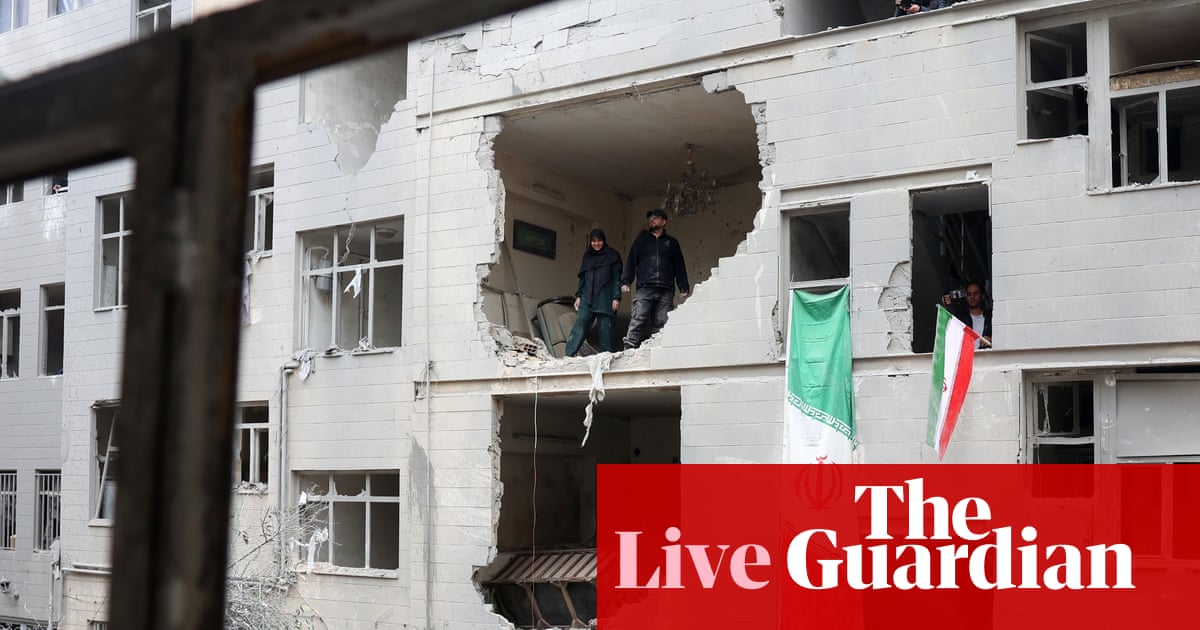
--The Iranian foreign minister, Abbas Araghchi, said the new supreme leader, Mojtaba Khamenei, is “in good health” and “fully managing the situation” despite ongoing speculation regarding his whereabouts. In his interview with NBC News, Trump questioned whether the 56-year-old was “even alive”.
 www.theguardian.com
--Iranian foreign minister, Abbas Araghchi, denied Tehran had asked for a ceasefire or even a negotiation to end the war, in comments undermining Donald Trump’s claim that Iran wanted to make a deal.
--Araghchi also said that Iran was open to countries who wanted to “talk” about safe passage through the strait of Hormuz, one of the world’s most important shipping channels, which has effectively been closed due to the war.
--Iran has attacked ships and reportedly started to lay mines in the strait, in effect closing it to marine traffic, leading to a surge in energy prices and inflation fears around the world.
--Countries including the UK, Japan, China and South Korea have said they are still considering their options after Trump urged them to send warships to the strait to secure the vital shipping route.
--Trump told NBC News that the “terms aren’t good enough yet” for a deal with Iran. He said Tehran’s commitment to completely abandoning any nuclear weapons ambitions would be part of any agreement.
--US energy secretary Chris Wright said he expects the US-Israel war with Iran to end within “the next few weeks” amid a spike in gas prices in the US.
--The Lebanese health ministry said 850 people, including over 100 children, have been killed in Israeli attacks on the country since 2 March.
--Israel said it launched extensive airstrikes across western Iran today. The IDF said earlier it had detected Iranian missiles being fired at Israel.
--Israeli military warned several neighbourhoods in the southern suburbs of the Lebanese capital of Beirut to evacuate “immediately” ahead of Israeli attacks.
--Oil-loading operations at Fujairah, the UAE’s main oil port on its east coast, have reportedly restarted after it was targeted by a drone strike on Saturday.
--The Iranian foreign minister, Abbas Araghchi, said the new supreme leader, Mojtaba Khamenei, is “in good health” and “fully managing the situation” despite ongoing speculation regarding his whereabouts. In his interview with NBC News, Trump questioned whether the 56-year-old was “even alive”.
Middle East crisis live: Israel says it has launched ‘extensive strikes’ on Iran as Trump says US ‘not ready’ to make a deal to end war
Foreign minister says that Tehran ‘never asked even for negotiation’, after Trump’s earlier comments that the US was ‘not ready’ to make a deal
www.theguardian.com
Aye, I can only count on my fingers, two exactly, that does omnibus threads properly on forums I'm in excluding this one, and I've joined many. People creating too many threads was jarringly disjointed and just wished for things to be a bit tidier. Can't say I have much news bringing here when the ones I got from my rss feed are too biased glazing their™ side of the story to be worth sharing.That's why I create these "omnibus threads." I've seen too many times on too many forums where a major world-changing event - like the current Middle Eastern conflict - is shown in so many different little threads that no one can follow along w/reasonable speed and clarity.
Go over to Discussion Bucks; I like that board, I really do but what I said in the earlier comment is exactly why I create "omnibus" threads.People creating too many threads was jarringly disjointed and just wished for things to be a bit tidier.
I get why there's a ton of threads in their tiny lanes but at the same time it does make it hard to follow events along.
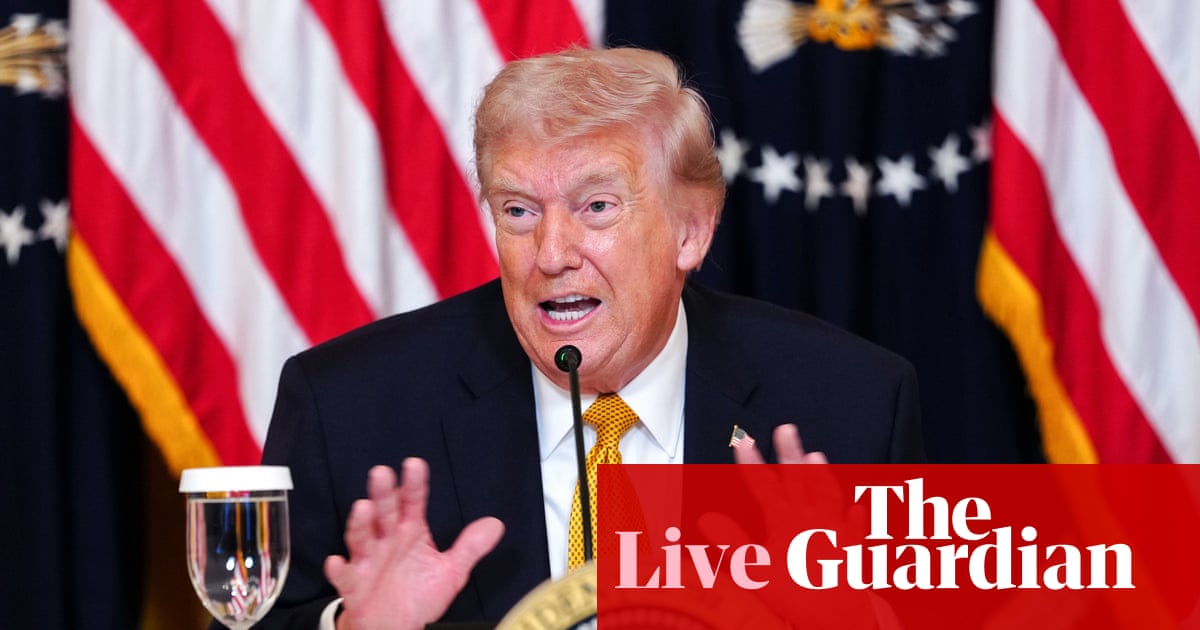
Middle East crisis live: Trump vents frustration with allies over strait of Hormuz; US embassy in Baghdad reportedly targeted in air attack
US president lashes out as European countries reject calls for assistance to reopen key shipping lane; Iraqi officials says several drones and rockets attacked embassy
www.theguardian.com
(The Guardian) 6:11pm Summary
--Donald Trump said he will “soon” announce countries that have agreed to help the US reopen the strait of Hormuz, as he criticised his many allies, including Nato and the UK, that have so far declined to get involved. He told reporters in the Oval Office that South Korea, Japan, and China, should be helping the US. He warned that Nato faced a “very bad” future if it didn’t help and said he was “not happy” with the UK.
--Meanwhile, allies responded by saying “this is not Nato war”, with the EU insisting it has “no appetite” to expand its naval mission to the strait of Hormuz. German chancellor Friedrich Merz earlier said this war “is not a matter for Nato”, while Nato said “allies have already stepped up to provide additional security in the Mediterranean”. The UK prime minister Keir Starmer had earlier resisted Trump’s call to send warships to the strait, saying the UK “will not be drawn into a wider war” but was working “with allies” on a plan to reopen the strait.
--Trump also said the war would be “wrapped up” soon, saying it wouldn’t be this week but “it won’t be long”. He also suggested he would delay his upcoming trip to China, which was scheduled for the end of March, by “a month or so”. His administration has insisted that this was not to pressure Beijing to help reopen the strait of Hormuz.
--US vice-president JD Vance deflected and attacked the media when he was asked if he supports Trump’s war on Iran, given his prior criticisms of open-ended US foreign interventionism. It followed US media reports that he had privately expressed scepticism and counselled Trump against striking Iran. Vance accused the media of trying to “drive a wedge” between him and his president, and repeated Trump’s claim that Tehran was close to developing a nuclear weapon. “I trust President Trump to get the job done,” he said.
--Iran’s foreign minister Abbas Araghchi denied recent contact with US special envoy Steve Witkoff, and said their last contact was prior to the US attack on Iran. He wrote on X: “My last contact with Mr. Witkoff was prior to his employer’s decision to kill diplomacy with another illegal military attack on Iran. Any claim to the contrary appears geared solely to mislead oil traders and the public.” It followed an Axios report that a direct communications channel between Witkoff and Araghchi had been reactivated in recent days, with Araghchi attempting to engage with Witkoff about ending the war.
--The leaders of the UK, France, Germany, Canada, and Italy issued a joint statement expressing “grave concern” after Israel launched a ground invasion of Lebanon. They called for meaningful engagement by Israeli and Lebanese representatives to negotiate a sustainable political solution. A significant Israeli ground offensive would have devastating humanitarian consequences, they warned, adding that it could lead to a protracted conflict with “devastating humanitarian consequences”.
--Earlier on Monday, the IDF had said its troops had begun what it described as “limited and targeted” ground operations – a ground invasion – against Hezbollah strongholds in southern Lebanon, and told hundreds of thousands of Lebanese civilians they cannot return to their homes.
--It comes as the latest reports indicate that Israeli strikes have killed at least 850 people in Lebanon, including at least 107 children, and have left more than a million displaced.
--Elsewhere, explosions were reported in Baghdad’s heavily fortified Green Zone, the highly secure section of the Iraqi capital that is home to diplomatic missions including the US embassy, and international organisations.
--Operations at the UAE’s Shah gas and oil field are suspended after a fire that broke out due a drone attack. Abu Dhabi authorities said on Monday night that the fire had been brought under control.
--Qatar said it intercepted a second wave of missiles from Iran following an attack earlier on Monday.
I wonder what made the UK not want to help. Could be a disagreement with the war happening as it was rather unpopular there.
POLITICO By Anne McElvoy, Esther Webber and Sophie Inge
Britain scrambles to shield Gulf allies as Iran war pounds on
Keir Starmer’s hesitation as war loomed in the Middle East has left Gulf allies exposed.POLITICO By Anne McElvoy, Esther Webber and Sophie Inge
LONDON — U.K. Prime Minister Keir Starmer has stressed since the start of the U.S. and Israeli-led war in Iran that Britain will only contribute to defensive operations, including limiting the U.S. use of British airbases, saying: “We have learned the lessons of Iraq.”
The problem as the war continues into its third week is that Starmer is now getting low marks from key allies in the Gulf for how he’s applied those lessons, according to senior military figures and diplomats who spoke to POLITICO. That has left London scrambling to deploy sufficient resources and show that it can provide adequate defensive support in the region as well as protect British assets, including its sovereign bases in Cyprus.
Three people familiar with operational and planning strategies, granted anonymity to speak frankly about sensitive matters, said the U.K. had bungled defensive decision-making and failed to send the necessary resources to the area at the time of the first U.S. and Israeli strikes on Iran.
Chief of the Defense Staff Richard Knighton has taken flak over delays in deploying HMS Dragon, a guided missile destroyer, to the Mediterranean for more than a week after the war started. But one former military commander familiar with conversations in government about the U.K. response said the greater fault lay in a risk-averse stance from Starmer as well as his National Security Adviser Jonathan Powell and Defense Secretary John Healey, whose fears over a domestic backlash to being embroiled in a conflict in the Middle East hobbled the U.K.'s thinking about how to support allies in the Gulf.
“No. 10 was determined to downplay any risk or perception of us getting involved and now the government is playing catch-up,” the former commander said. “And that means we are showing up late.”
Others POLITICO spoke with said the failure to deploy maritime assets — especially in minesweeper expertise and air defense — has shaken states ranging from Bahrain and the United Arab Emirates with longstanding close defense ties to the U.K.
This perceived lapse has left Britain on the back foot both in its deployment of assets and in diplomatic relations with partners, visible in the U.K.’s concerted effort last week to demonstrate support for Gulf countries facing retaliatory strikes from Iran, as Foreign Secretary Yvette Cooper travelled to Saudi Arabia.
The prime minister and defense secretary have highlighted extra resources deployed to the region since widespread unrest erupted in Iran at the start of the year, including fighter jets, air defense missiles and radar systems. And there are mounting signs that Starmer and Healey have understood the extent of sore feelings among allies and are seeking to assuage any tensions with Gulf allies as well as with the U.S.
In a social post on Sunday, the Ministry of Defense highlighted U.K. Typhoon and F-35 jets flying over Bahrain for the first time in “defense of British interests” and Britain's role in air protection over the United Arab Emirates, Qatar and Cyprus. Christian Turner, Britain’s ambassador to Washington, also issued a video over the weekend noting that British pilots have spent “over 300 hours in the skies above the Middle East shooting down Iranian drones and missiles” as well as drawing attention to the U.S. use of U.K. bases and sharing of intelligence.
“We acted early to protect British people and British interests and to support our allies across the region,” a Ministry of Defense spokesperson said, specifically noting defense patrols with extra Typhoons in Qatar to support that country as well as Bahrain and the UAE. “Those preparations made a real difference, enabling our troops to conduct defensive operations from Day One.”
“We acted early to protect British people and British interests and to support our allies across the region,” a Ministry of Defense spokesperson said, specifically noting defense patrols with extra Typhoons in Qatar to support that country as well as Bahrain and the United Arab Emirates. “Those preparations made a real difference, enabling our troops to conduct defensive operations from Day One.”
A Downing Street spokesperson declined to comment further, referring inquiries to the Ministry of Defense. But a government official, granted anonymity as they were not authorized to speak on the record, insisted Starmer and Healey had “followed all military recommendations presented to them throughout the build-up” and hit out at “armchair generals who aren’t seeing the intelligence and information that our military see every day.”
Yet a person with knowledge of deployment decisions said that close allies of the U.K. were “deeply disappointed” by the lack of preparation. “There had been knowledge of the preparations for U.S. action on Iran on a large scale from around Christmas and the U.K. had visibility on that,” this person said. “But the response was wholly inadequate.”
If a full array of options had been considered, according to this person, a submarine presence from the Royal Navy might have been sent to the region as a deterrent under the terms of Operation Kipion, a long-standing umbrella for British security, intelligence gathering and deterrence to the Gulf.
One area of concern has been the decommissioning of ships, some of which were moved for servicing and routine upgrades in recent weeks.
HMS Middleton, which was based in Bahrain, arrived back in Britain on March 1 — the day after the U.S. and Israel opened their attack — for maintenance and a technological upgrade. The vessel, which is more than 40 years old, was no longer certified to sail, according to the MOD. The U.K.’s only mine-hunting ship was brought back to Britain to save money just as strikes began, according to The Times.
Healey told reporters this week he was still considering “additional options” for protecting the Strait of Hormuz.
The former commander was frustrated by a gap between the prime minister and Healey’s robust language about Britain's need for war-readiness and the reality of its actions.
“We have the prime minister and defense secretary talking about ‘preparing the nation for war’ on a running basis, which is ironic, as we and our allies ended up not deploying deterrent force and taking a week to deploy a major warship to defend Cyprus in good time to show our strong defensive intentions,” this person said.
A senior Gulf diplomat said the U.K.’s early response to the conflict fell short of what Gulf partners expected given Britain’s longstanding military ties in the region. There were “a lot of phone calls,” the diplomat said, but not much in the way of “serious support.”
John Foreman, a former deputy head of the Combined Maritime Forces in Bahrain, said Starmer’s cautious approach was bound to cause continued problems as the conflict continues, particularly amid rising focus on protecting the Strait of Hormuz.
“Wiser, less cautious heads would have got ahead of the game,” Foreman said. “It comes from Starmer ultimately and the tone of his government. It’s too late for Powell to be asking for options on the eve of war — and for Healey to still be pondering options now.”
I know what it was; Trump insults everyone and then expects them to help.I wonder what made the UK not want to help.
Problem is, when you piss off the service (to borrow the expression), don't be surprised when they don't come running.
(The Guardian) 10:58pm Summary
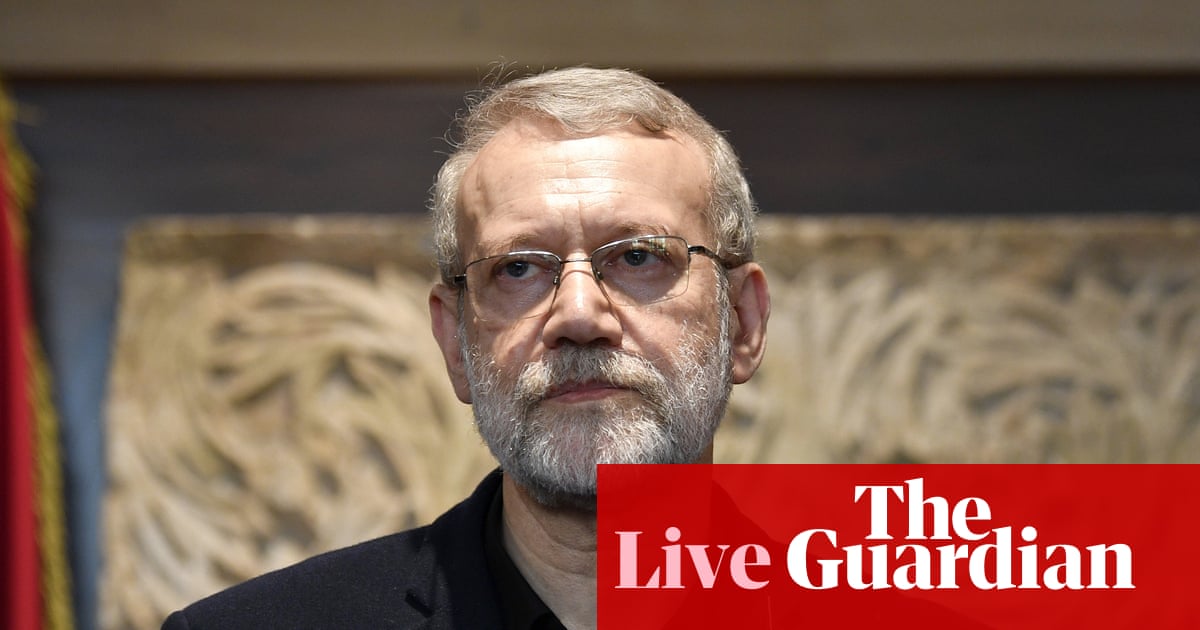
--The Iranian army has vowed revenge for the killing of security chief Ali Larijani in an Israeli airstrike, with Iran’s army chief threatening to launch a “decisive and regrettable” retaliation.
--Iran also confirmed the death of the Basij militia commander Gholamreza Soleimani, after Israel earlier claimed its military assassinated him. It marks the highest level assassination in the war since joint US-Israeli strikes killed the former supreme leader Ali Khamenei on 28 February.
--The Israeli military called on residents of a central Beirut neighbourhood to evacuate early Wednesday, warning of an imminent attack on the Lebanese capital targeting Iran-backed militant group Hezbollah. In a statement on social media, the military’s Arabic-language spokesman Avichay Adraee issued “an urgent warning to residents of... Bashoura neighbourhood”, saying Israeli forces would operate against a Hezbollah facility there.
--Donald Trump continued to lash out at Nato allies, claiming “we don’t need” their help in the Iran war after pressuring them to help the US secure the strait of Hormuz, but added that “they should’ve been there”. Trump said Nato was making a “foolish mistake” and once again framed the issue as a loyalty test for the alliance.
--The US military said it targeted sites along Iran’s coastline near the strait of Hormuz because Iranian anti-ship missiles posed a risk to international shipping there. US Central Command said US forces successfully employed “multiple 5,000-pound deep penetrator munitions” in the strikes.
--Trump’s former director of the national counterterrorism center Joe Kent quit, saying he “cannot in good conscience support the ongoing war in Iran”. In his resignation letter, Kent accused “high-ranking Israeli officials and influential members of the American media” of deploying “a misinformation campaign” that ultimately “sowed pro-war sentiments to encourage a war with Iran”.
--Israel’s assault on Lebanon has killed at least 912 people, including 111 children, and wounded 2,221 others, per the Lebanese health ministry, with over a million people displaced.
--Israeli attacks on residential buildings and civilian infrastructure in Lebanon may amount to war crimes, the United Nations human rights office said.
--The Israeli military earlier issued a fresh evacuation order for the coastal Lebanese city of Tyre and its surrounding villages and Palestinian refugee camps, sparking an exodus of residents from Lebanon’s fourth largest city.
--A projectile hit the premises of Iran’s Bushehr nuclear power plant on Tuesday night. But no damage to the plant or injuries to staff were reported, Iran told the UN nuclear watchdog International Atomic Energy Agency (IAEA).
 www.theguardian.com
--The Iranian army has vowed revenge for the killing of security chief Ali Larijani in an Israeli airstrike, with Iran’s army chief threatening to launch a “decisive and regrettable” retaliation.
--Iran also confirmed the death of the Basij militia commander Gholamreza Soleimani, after Israel earlier claimed its military assassinated him. It marks the highest level assassination in the war since joint US-Israeli strikes killed the former supreme leader Ali Khamenei on 28 February.
--The Israeli military called on residents of a central Beirut neighbourhood to evacuate early Wednesday, warning of an imminent attack on the Lebanese capital targeting Iran-backed militant group Hezbollah. In a statement on social media, the military’s Arabic-language spokesman Avichay Adraee issued “an urgent warning to residents of... Bashoura neighbourhood”, saying Israeli forces would operate against a Hezbollah facility there.
--Donald Trump continued to lash out at Nato allies, claiming “we don’t need” their help in the Iran war after pressuring them to help the US secure the strait of Hormuz, but added that “they should’ve been there”. Trump said Nato was making a “foolish mistake” and once again framed the issue as a loyalty test for the alliance.
--The US military said it targeted sites along Iran’s coastline near the strait of Hormuz because Iranian anti-ship missiles posed a risk to international shipping there. US Central Command said US forces successfully employed “multiple 5,000-pound deep penetrator munitions” in the strikes.
--Trump’s former director of the national counterterrorism center Joe Kent quit, saying he “cannot in good conscience support the ongoing war in Iran”. In his resignation letter, Kent accused “high-ranking Israeli officials and influential members of the American media” of deploying “a misinformation campaign” that ultimately “sowed pro-war sentiments to encourage a war with Iran”.
--Israel’s assault on Lebanon has killed at least 912 people, including 111 children, and wounded 2,221 others, per the Lebanese health ministry, with over a million people displaced.
--Israeli attacks on residential buildings and civilian infrastructure in Lebanon may amount to war crimes, the United Nations human rights office said.
--The Israeli military earlier issued a fresh evacuation order for the coastal Lebanese city of Tyre and its surrounding villages and Palestinian refugee camps, sparking an exodus of residents from Lebanon’s fourth largest city.
--A projectile hit the premises of Iran’s Bushehr nuclear power plant on Tuesday night. But no damage to the plant or injuries to staff were reported, Iran told the UN nuclear watchdog International Atomic Energy Agency (IAEA).
Middle East crisis live: Iran vows revenge for killing of security chief; Israel signals imminent Beirut strike
Security chief Ali Larijhani was killed in an Israeli strike; Israeli military called for evacuations in central Beirut, warning of an imminent attack
www.theguardian.com
(The Guardian) Gabbard won't say if White House claim Iran posed an 'imminent nuclear threat' is true
As Guardian correspondents Joseph Gedeon and George Chidi report, Democrats on the Senate intelligence committee pressed Tulsi Gabbard, the director of national intelligence, to explain why her deputy, Joe Kent, said in his resignation letter on Tuesday that “Iran posed no imminent threat to our nation”, which contradicts weeks of statements to the contrary by Donald Trump.
The president and his aides have repeatedly described the threat posed by Iran as imminent to justify the war, although when he announced the start of “major combat operations in Iran” from his Florida beach club on 28 February, Trump declared that it was a mission “to defend the American people by eliminating eminent threats from the Iranian regime”, having apparently misread the word “imminent” on the Teleprompter.
In a carefully worded statement after Kent’s resignation on Tuesday, Gabbard, who made opposition to war with Iran the central plank of her failed run for the presidency in 2020, said that “determining what is and is not an imminent threat” was up to the president, not the intelligence community she oversees. She notably failed to say that the intelligence she had seen supported Trump’s claim that Iran was about to attack the US.
In his questioning of Gabbard, Senator Jon Ossoff, a Georgia Democrat, pointed out that on day 2 of the conflict the White House website called the US attack a “military campaign to eliminate the imminent nuclear threat posed by the Iranian regime”.
“Was it the assessment of the intelligence community that there was an ‘imminent nuclear threat posed by the Iranian regime’, yes or no?” Ossoff asked.
When Gabbard replied, “Senator, the only person who can determine what is and is not an imminent threat is the president,” Ossoff shot back: “False. This is the ‘Worldwide Threats’ hearing, where you present to Congress ‘national intelligence, timely, objective and independent of political considerations’. You’ve stated today that the intelligence community’s assessment is that Iran’s nuclear enrichment program was obliterated and that ‘there had been no efforts since then to try to rebuild their enrichment capability’.”
“Was it the intelligence community’s assessment,” he continued, “that, nevertheless, despite this obliteration, there was a quote ‘imminent nuclear threat posed by the Iranian regime’? Yes or no.”
“It is not the intelligence community’s responsibility to determine what is and is not an imminent threat,” Gabbard replied.
“No, it is precisely your responsibility to determine what constitutes a threat to the United States. This is the ‘Worldwide Threats’ hearing, where, as you noted in your opening testimony, quote, you ‘represent the IC’s assessment of threats’.”
When Ossoff again repeated the question of whether there was intelligence to support the White House claim Iran posed “imminent nuclear threat”, Gabbard repeated her claim that it was up to the president to say if a threat was imminent. “You’re evading a question because to provide a candid response to the committee would contradict a statement from the White House,” Ossoff concluded.
Gabbard was also forced to admit that just last year the intelligence community’s annual threat assessment said clearly that Iran was not pursuing nuclear weapons. “We continue to assess Iran is not building a nuclear weapon and that Khamenei has not reauthorized the nuclear weapons program he suspended in 2003”, the 2025 report stated.
(The Guardian) 11:43pm Summary
--Donald Trump has threatened to “massively blow up” the entire South Pars gas field if Iran carries out any more retaliatory attacks on Qatar’s LNG gas facilities. Trump said that “no more attacks will be made by Israel” on the field – unless Iran “decides to attack a very innocent, in this case, Qatar”.
--The Pentagon “has asked the White House to approve a more than $200bn request to Congress to fund the war in Iran, according to a senior administration official”, the Washington Post reports.
--The oil price climbed towards $110 a barrel on Wednesday as the mounting threat to the Gulf’s oil and gas infrastructure fuelled concerns of more disruption to global supplies, amid the continuing blockade of the strait of Hormuz.
--QatarEnergy said “sizeable fires” caused extensive damage at its LNG facilities after Iranian missile attacks in the early hours of Thursday.
--An attack set a ship ablaze early on Thursday off the UAE coast, authorities said. The United Kingdom Maritime Trade Operations centre said “a vessel has been hit by an unknown projectile, which has resulted in a fire onboard”.
--French president Emmanuel Macron called for an immediate moratorium on striking civilian infrastructure, and said civilian populations and their needs must be “protected from military escalation”.
--Three Palestinian women were killed in an Iranian missile attack in the occupied West Bank late on Wednesday, the Palestinian Red Crescent said, in the first deadly Iranian strike there.
--A man was killed in central Israel in the latest round of Iranian missile fire, medics say. It brings the death roll in Israel from the war to 15.
--Republicans in the US Senate blocked a measure that aimed to reign in Donald Trump’s power to wage war against Iran without congressional authorisation, winning a 53-47 vote.
--Donald Trump has threatened to “massively blow up” the entire South Pars gas field if Iran carries out any more retaliatory attacks on Qatar’s LNG gas facilities. Trump said that “no more attacks will be made by Israel” on the field – unless Iran “decides to attack a very innocent, in this case, Qatar”.
--The Pentagon “has asked the White House to approve a more than $200bn request to Congress to fund the war in Iran, according to a senior administration official”, the Washington Post reports.
--The oil price climbed towards $110 a barrel on Wednesday as the mounting threat to the Gulf’s oil and gas infrastructure fuelled concerns of more disruption to global supplies, amid the continuing blockade of the strait of Hormuz.
--QatarEnergy said “sizeable fires” caused extensive damage at its LNG facilities after Iranian missile attacks in the early hours of Thursday.
--An attack set a ship ablaze early on Thursday off the UAE coast, authorities said. The United Kingdom Maritime Trade Operations centre said “a vessel has been hit by an unknown projectile, which has resulted in a fire onboard”.
--French president Emmanuel Macron called for an immediate moratorium on striking civilian infrastructure, and said civilian populations and their needs must be “protected from military escalation”.
--Three Palestinian women were killed in an Iranian missile attack in the occupied West Bank late on Wednesday, the Palestinian Red Crescent said, in the first deadly Iranian strike there.
--A man was killed in central Israel in the latest round of Iranian missile fire, medics say. It brings the death roll in Israel from the war to 15.
--Republicans in the US Senate blocked a measure that aimed to reign in Donald Trump’s power to wage war against Iran without congressional authorisation, winning a 53-47 vote.
(The Guardian) 5:43pm Summary
--Benjamin Netanyahu denied that Donald Trump was “dragged” into the war by Israel, as he tried to pour cold water on suggestions that Israel influenced the US’s decision to attack Iran and amid growing signs that the US and Israel are not aligned on their war aims. “Does anyone really think that someone can tell President Trump what to do, the Israeli prime minister said, later adding: “I misled no one.”
--Netanyahu also stated that Israel “acted alone” in striking Iran’s South Pars gasfield, though he didn’t address whether or not he had told Trump about the attack beforehand. “President Trump asked us to hold off on future attacks, and we’re holding out,” he added. Trump has distanced himself from Israel’s attack on the world’s largest gasfield (which he claimed on Wednesday that Washington “knew nothing” about), and confirmed today that he told Netanyahu to stop attacking Iran’s energy facilities.
--Netanyahu also claimed that Iran has “no ability to enrich uranium at the moment and no capability of manufacturing ballistic missiles”. He said that the war would take “as long as is necessary”, adding: “We will crush them entirely, all those capabilities.”
--Trump said there are no plans to deploy US ground troops in the region and claimed that the US operation was “ahead of schedule”, but he did confirm that the Pentagon has asked Congress to approve a further $200bn to fund the war.
--US Central Command said that it has destroyed the Iranian regime’s surface-to-surface missile plant in Karaj. The plant was used to “assemble ballistic missiles that threatened Americans, neighboring countries, and commercial shipping,” Centcom said.
--France will double its humanitarian aid to Lebanon to the value of €17m ($19.7m), foreign minister Jean-Noel Barrot said, as Lebanon grapples with Israel’s latest military assault. Israeli strikes on Beirut and its ground invasion of southern Lebanon have killed over 1,000 people, including 118 children, and wounded more than 2,500 since Tel Aviv’s renewed offensive on 2 March. More than one million – roughly one in five – of the population have been displaced.
--An Iranian missile attack hit Israel’s Oil Refineries in the northern port city of Haifa but did not cause “significant damage“, Israel’s energy ministry said. Energy minister Eli Cohen said power was briefly disrupted, with electricity restored to most of those who were affected, Reuters reported.
--Benjamin Netanyahu denied that Donald Trump was “dragged” into the war by Israel, as he tried to pour cold water on suggestions that Israel influenced the US’s decision to attack Iran and amid growing signs that the US and Israel are not aligned on their war aims. “Does anyone really think that someone can tell President Trump what to do, the Israeli prime minister said, later adding: “I misled no one.”
--Netanyahu also stated that Israel “acted alone” in striking Iran’s South Pars gasfield, though he didn’t address whether or not he had told Trump about the attack beforehand. “President Trump asked us to hold off on future attacks, and we’re holding out,” he added. Trump has distanced himself from Israel’s attack on the world’s largest gasfield (which he claimed on Wednesday that Washington “knew nothing” about), and confirmed today that he told Netanyahu to stop attacking Iran’s energy facilities.
--Netanyahu also claimed that Iran has “no ability to enrich uranium at the moment and no capability of manufacturing ballistic missiles”. He said that the war would take “as long as is necessary”, adding: “We will crush them entirely, all those capabilities.”
--Trump said there are no plans to deploy US ground troops in the region and claimed that the US operation was “ahead of schedule”, but he did confirm that the Pentagon has asked Congress to approve a further $200bn to fund the war.
--US Central Command said that it has destroyed the Iranian regime’s surface-to-surface missile plant in Karaj. The plant was used to “assemble ballistic missiles that threatened Americans, neighboring countries, and commercial shipping,” Centcom said.
--France will double its humanitarian aid to Lebanon to the value of €17m ($19.7m), foreign minister Jean-Noel Barrot said, as Lebanon grapples with Israel’s latest military assault. Israeli strikes on Beirut and its ground invasion of southern Lebanon have killed over 1,000 people, including 118 children, and wounded more than 2,500 since Tel Aviv’s renewed offensive on 2 March. More than one million – roughly one in five – of the population have been displaced.
--An Iranian missile attack hit Israel’s Oil Refineries in the northern port city of Haifa but did not cause “significant damage“, Israel’s energy ministry said. Energy minister Eli Cohen said power was briefly disrupted, with electricity restored to most of those who were affected, Reuters reported.
(The Guardian) 5:15pm Summary
--Donald Trump continued to make his disappointment with the British government known, saying the UK “should have acted a lot faster” in allowing the US military to use its bases in the Middle East. “I was a little surprised at the UK, to be honest with you. They should have acted a lot faster,” he told reporters as he departed the White House.
--Earlier, Downing Street approved US use of its bases “for the collective self-defence of the region”, including “defensive operations” degrading Iranian missile sites targeting ships in the strait of Hormuz. Britain had previously only allowed US forces to use its bases for operations to prevent Iran firing missiles that put British interests or lives at risk. Downing Street maintained that the UK will still not be directly involved in the strikes and insisted that “the principles behind the UK’s approach to the conflict remain the same”.
--Iran’s foreign minister Abbas Araghchi said the British prime minsiter Keir Starmer “is putting British lives in danger by allowing UK bases to be used for aggression against Iran”. “Iran will exercise its right to self-defense,” he added.It followed the UK’s foreign secretary Yvette Cooper saying she warned Araghchi in a phone call on Thursday “against targeting UK bases, territory or interests directly”. Iran’s foreign ministry had earlier said the US use of British military bases for attacks would amount to the UK’s “participation in aggression”.
--Araghchi also accused the Trump administration of being “detached from reality” as it continues to insist that it is winning the war against Iran. Comparing Washington’s rhetoric to that of the US government during the Vietnam war, he said: “US government says one thing, reality says another.”
--Donald Trump also ruled out a ceasefire with Iran, after claiming the war was “militarily won”. “You don’t do a ceasefire when you’re literally obliterating the other side,” he said. He also said the US was “roaming free” in Iran, adding, “they’re finished” militarily.
--Asked if he thinks Israel will be ready to end the war when he’s ready, Trump said: “I think so, yeah.” The relationship is “a very good one”, he said, adding that, “more of less, we want similar things. We want victory, both of us, and that’s what we’ve got.” It comes amid increasing evidence that the US and Israel aren’t aligned on their war aims and how to proceed with their operation against Tehran.
--Trump also reiterated his criticism of Nato – whose members he earlier branded “cowards” – adding that “a lot of help” would be needed to secure the strait of Hormuz and that “it would be nice” if countries that use the strait, like China and Japan, would “get involved” in reopening the vital waterway.
--Donald Trump continued to make his disappointment with the British government known, saying the UK “should have acted a lot faster” in allowing the US military to use its bases in the Middle East. “I was a little surprised at the UK, to be honest with you. They should have acted a lot faster,” he told reporters as he departed the White House.
--Earlier, Downing Street approved US use of its bases “for the collective self-defence of the region”, including “defensive operations” degrading Iranian missile sites targeting ships in the strait of Hormuz. Britain had previously only allowed US forces to use its bases for operations to prevent Iran firing missiles that put British interests or lives at risk. Downing Street maintained that the UK will still not be directly involved in the strikes and insisted that “the principles behind the UK’s approach to the conflict remain the same”.
--Iran’s foreign minister Abbas Araghchi said the British prime minsiter Keir Starmer “is putting British lives in danger by allowing UK bases to be used for aggression against Iran”. “Iran will exercise its right to self-defense,” he added.It followed the UK’s foreign secretary Yvette Cooper saying she warned Araghchi in a phone call on Thursday “against targeting UK bases, territory or interests directly”. Iran’s foreign ministry had earlier said the US use of British military bases for attacks would amount to the UK’s “participation in aggression”.
--Araghchi also accused the Trump administration of being “detached from reality” as it continues to insist that it is winning the war against Iran. Comparing Washington’s rhetoric to that of the US government during the Vietnam war, he said: “US government says one thing, reality says another.”
--Donald Trump also ruled out a ceasefire with Iran, after claiming the war was “militarily won”. “You don’t do a ceasefire when you’re literally obliterating the other side,” he said. He also said the US was “roaming free” in Iran, adding, “they’re finished” militarily.
--Asked if he thinks Israel will be ready to end the war when he’s ready, Trump said: “I think so, yeah.” The relationship is “a very good one”, he said, adding that, “more of less, we want similar things. We want victory, both of us, and that’s what we’ve got.” It comes amid increasing evidence that the US and Israel aren’t aligned on their war aims and how to proceed with their operation against Tehran.
--Trump also reiterated his criticism of Nato – whose members he earlier branded “cowards” – adding that “a lot of help” would be needed to secure the strait of Hormuz and that “it would be nice” if countries that use the strait, like China and Japan, would “get involved” in reopening the vital waterway.
(The Guardian) 10:41am Summary
--Iran fired missiles at the US/UK Diego Garcia military base in the Indian Ocean, the UK Ministry of Defence has confirmed. The MoD said the strikes were unsuccessful, and took place before the UK said the US could use its bases for “specific and limited defence operations”.
--Israel’s defence minister Israel Katz said strikes on Iran will “intensify” next week. In a statement Katz said there would be a “significant” rise in the attacks.
--Israel and the US targeted an Iranian nuclear enrichment plant overnight. The head of the International Atomic Energy Agency has called for restraint. Iran said there had not been any radioactive leakage, and no residents were in danger.
--The Israel Defence Force claimed it had “significantly degraded” ballistic missile production at a factory in Tehran with airstrikes. It said “dozens” of targets were attacked, including those used to produce critical parts for missiles.
--Meanwhile the US military said Iran’s ability to threaten ships in the strait of Hormuz has been reduced after it attacked an underground facility that stored cruise missiles. The commander of the US central command said US forces had destroyed intelligence support sites and radar relays.
--Donald Trump has said he is considering “winding down” military operations against Iran. “We are getting very close to meeting our objectives,” the US president posted on Friday on his Truth Social platform in the strongest indication yet that he may be prepared to soon end the hostilities that began three weeks ago.
--More than twenty countries now say they are “ready to contribute” to the safe passage of ships going through the strait of Hormuz. It said they were ready to contribute “appropriate efforts” to ensure safe passage through the waterway, which is critical to global oil markets.
--An officer was killed in a drone attack on Iraq’s intelligence headquarters in Baghdad. The intelligence service blamed “outlaw groups” and said a second officer was wounded. It took place at about 10am local time.
--The Israel Defence Force killed four Hezbollah members in southern Lebanon overnight, the military has said. The IDF posted on Telegram that a combination of ground troops and the Israeli air force killed one – and tanks killed three more.
--European diplomats have criticised increasing “settler terror” in the West Bank, with six Palestinians shot dead in settler attacks in the area this month. Representatives of 13 European countries including the UK and France issued a joint statement alongside Canada.
--In the UK two people have been charged, one of them Iranian, after they allegedly tried to enter a naval base in Scotland which houses the UK’s nuclear Trident submarines. They were arrested on Thursday.
--Iran fired missiles at the US/UK Diego Garcia military base in the Indian Ocean, the UK Ministry of Defence has confirmed. The MoD said the strikes were unsuccessful, and took place before the UK said the US could use its bases for “specific and limited defence operations”.
--Israel’s defence minister Israel Katz said strikes on Iran will “intensify” next week. In a statement Katz said there would be a “significant” rise in the attacks.
--Israel and the US targeted an Iranian nuclear enrichment plant overnight. The head of the International Atomic Energy Agency has called for restraint. Iran said there had not been any radioactive leakage, and no residents were in danger.
--The Israel Defence Force claimed it had “significantly degraded” ballistic missile production at a factory in Tehran with airstrikes. It said “dozens” of targets were attacked, including those used to produce critical parts for missiles.
--Meanwhile the US military said Iran’s ability to threaten ships in the strait of Hormuz has been reduced after it attacked an underground facility that stored cruise missiles. The commander of the US central command said US forces had destroyed intelligence support sites and radar relays.
--Donald Trump has said he is considering “winding down” military operations against Iran. “We are getting very close to meeting our objectives,” the US president posted on Friday on his Truth Social platform in the strongest indication yet that he may be prepared to soon end the hostilities that began three weeks ago.
--More than twenty countries now say they are “ready to contribute” to the safe passage of ships going through the strait of Hormuz. It said they were ready to contribute “appropriate efforts” to ensure safe passage through the waterway, which is critical to global oil markets.
--An officer was killed in a drone attack on Iraq’s intelligence headquarters in Baghdad. The intelligence service blamed “outlaw groups” and said a second officer was wounded. It took place at about 10am local time.
--The Israel Defence Force killed four Hezbollah members in southern Lebanon overnight, the military has said. The IDF posted on Telegram that a combination of ground troops and the Israeli air force killed one – and tanks killed three more.
--European diplomats have criticised increasing “settler terror” in the West Bank, with six Palestinians shot dead in settler attacks in the area this month. Representatives of 13 European countries including the UK and France issued a joint statement alongside Canada.
--In the UK two people have been charged, one of them Iranian, after they allegedly tried to enter a naval base in Scotland which houses the UK’s nuclear Trident submarines. They were arrested on Thursday.
(The Guardian) 11:16pm Summary
--President Donald Trump has threatened to “obliterate” Iran’s power plants if Tehran does not fully reopen the strait of Hormuz within 48 hours – threatening a new escalation, just a day after the president spoke of “winding down” the war.
--Trump’s warning on Saturday triggered a response from Iran’s military that it will target all US “energy, information technology and desalination infrastructure” if its own facilities are attacked.
--Iranian ballistic missile barrages wounded about 100 people in southern Israel on Saturday, striking the cities of Arad and Dimona after air defence systems failed to intercept at least two projectiles. The Israeli Air Force is investigating its failure to prevent the attacks. Benjamin Netanyahu called it “a very difficult evening in the campaign for our future”.
--The International Atomic Energy Agency said it had received no indication of damage to the Negev nuclear research centre, which is near to Dimona.
--In the early hours on Sunday, Israeli military announced in a brief statement that it was conducting strikes in Tehran.
--Saudi Arabia’s ministry of defence said it had detected three missiles launched towards Riyadh early in the morning. One of the missiles was intercepted, while two fell in an uninhabited area, it said.
--Iran on Saturday launched two ballistic missiles with a range of 4,000 km (2,500 miles) at the US-British military base at Diego Garcia in the Indian Ocean, according to the Israeli military, which said it was the first time Iran had used long-range missiles since the conflict began on February 28.
--The British foreign secretary condemned the attacks on Diego Garcia, while stressing the UK has “taken a different position from the US and Israel” on the conflict. Yvette Cooper said ministers wanted to see a swift resolution to the war, adding the government was supporting defensive action against the “reckless Iranian threats”.
--A projectile struck close to a bulk carrier off the coast of the United Arab Emirates on Sunday, causing an explosion, according to the British military’s United Kingdom Maritime Trade Operations center.
--The death toll has risen to more than 1,500 people in Iran, more than 1,000 people in Lebanon, 15 in Israel and 13 US military members, and a number of civilians on land and sea in the Gulf region, according to Associated Press. Millions of people in Lebanon and Iran have been displaced.
--President Donald Trump has threatened to “obliterate” Iran’s power plants if Tehran does not fully reopen the strait of Hormuz within 48 hours – threatening a new escalation, just a day after the president spoke of “winding down” the war.
--Trump’s warning on Saturday triggered a response from Iran’s military that it will target all US “energy, information technology and desalination infrastructure” if its own facilities are attacked.
--Iranian ballistic missile barrages wounded about 100 people in southern Israel on Saturday, striking the cities of Arad and Dimona after air defence systems failed to intercept at least two projectiles. The Israeli Air Force is investigating its failure to prevent the attacks. Benjamin Netanyahu called it “a very difficult evening in the campaign for our future”.
--The International Atomic Energy Agency said it had received no indication of damage to the Negev nuclear research centre, which is near to Dimona.
--In the early hours on Sunday, Israeli military announced in a brief statement that it was conducting strikes in Tehran.
--Saudi Arabia’s ministry of defence said it had detected three missiles launched towards Riyadh early in the morning. One of the missiles was intercepted, while two fell in an uninhabited area, it said.
--Iran on Saturday launched two ballistic missiles with a range of 4,000 km (2,500 miles) at the US-British military base at Diego Garcia in the Indian Ocean, according to the Israeli military, which said it was the first time Iran had used long-range missiles since the conflict began on February 28.
--The British foreign secretary condemned the attacks on Diego Garcia, while stressing the UK has “taken a different position from the US and Israel” on the conflict. Yvette Cooper said ministers wanted to see a swift resolution to the war, adding the government was supporting defensive action against the “reckless Iranian threats”.
--A projectile struck close to a bulk carrier off the coast of the United Arab Emirates on Sunday, causing an explosion, according to the British military’s United Kingdom Maritime Trade Operations center.
--The death toll has risen to more than 1,500 people in Iran, more than 1,000 people in Lebanon, 15 in Israel and 13 US military members, and a number of civilians on land and sea in the Gulf region, according to Associated Press. Millions of people in Lebanon and Iran have been displaced.
(The Guardian) 10:48am Summary
--Iran’s Islamic Revolutionary Guard Corps (IRGC) said it would “completely close” the strait of Hormuz, one of the world’s busiest oil shipping channels, if the US targets Iranian energy infrastructure.
--Iran warned earlier today that critical infrastructure and energy facilities in the Middle East could be “irreversibly destroyed” if Iranian power plants are attacked.
--The warnings were issued after the US president, Donald Trump, said the US would “obliterate” Iranian power plants if the strait of Hormuz is not open before a 48-hour deadline, marking another dangerous escalation in the US-Israeli war on Iran that has spiralled across the region.
--An Iranian official reportedly said that, with the right security and safety arrangements, the strait of Hormuz is open to all vessels except the ships of “enemy” countries, in an apparent reference to the US, Israel and its allies.
--Iran has permitted some friendly countries, including China, India, Pakistan, to secure safe passage of their ships through the waterway, but has effectively closed it down for others by attacking ships and reportedly laying mines.
--Israel launched airstrikes on the Iranian capital of Tehran overnight and Iran has retaliated with missile attacks.
--Iranian missile strikes have injured about 200 people in southern Israel, after air defence systems failed to intercept projectiles that hit two cities close to a nuclear facility.
--Iranian attacks on Gulf nations continued on Sunday morning.
--The Israeli military has been told to accelerate the demolition of Lebanese homes in frontline villages close to the border and to destroy bridges over the Litani River.
--Iran’s Islamic Revolutionary Guard Corps (IRGC) said it would “completely close” the strait of Hormuz, one of the world’s busiest oil shipping channels, if the US targets Iranian energy infrastructure.
--Iran warned earlier today that critical infrastructure and energy facilities in the Middle East could be “irreversibly destroyed” if Iranian power plants are attacked.
--The warnings were issued after the US president, Donald Trump, said the US would “obliterate” Iranian power plants if the strait of Hormuz is not open before a 48-hour deadline, marking another dangerous escalation in the US-Israeli war on Iran that has spiralled across the region.
--An Iranian official reportedly said that, with the right security and safety arrangements, the strait of Hormuz is open to all vessels except the ships of “enemy” countries, in an apparent reference to the US, Israel and its allies.
--Iran has permitted some friendly countries, including China, India, Pakistan, to secure safe passage of their ships through the waterway, but has effectively closed it down for others by attacking ships and reportedly laying mines.
--Israel launched airstrikes on the Iranian capital of Tehran overnight and Iran has retaliated with missile attacks.
--Iranian missile strikes have injured about 200 people in southern Israel, after air defence systems failed to intercept projectiles that hit two cities close to a nuclear facility.
--Iranian attacks on Gulf nations continued on Sunday morning.
--The Israeli military has been told to accelerate the demolition of Lebanese homes in frontline villages close to the border and to destroy bridges over the Litani River.
Similar threads


- Replies
- 0
- Views
- 95
- Replies
- 1
- Views
- 129
